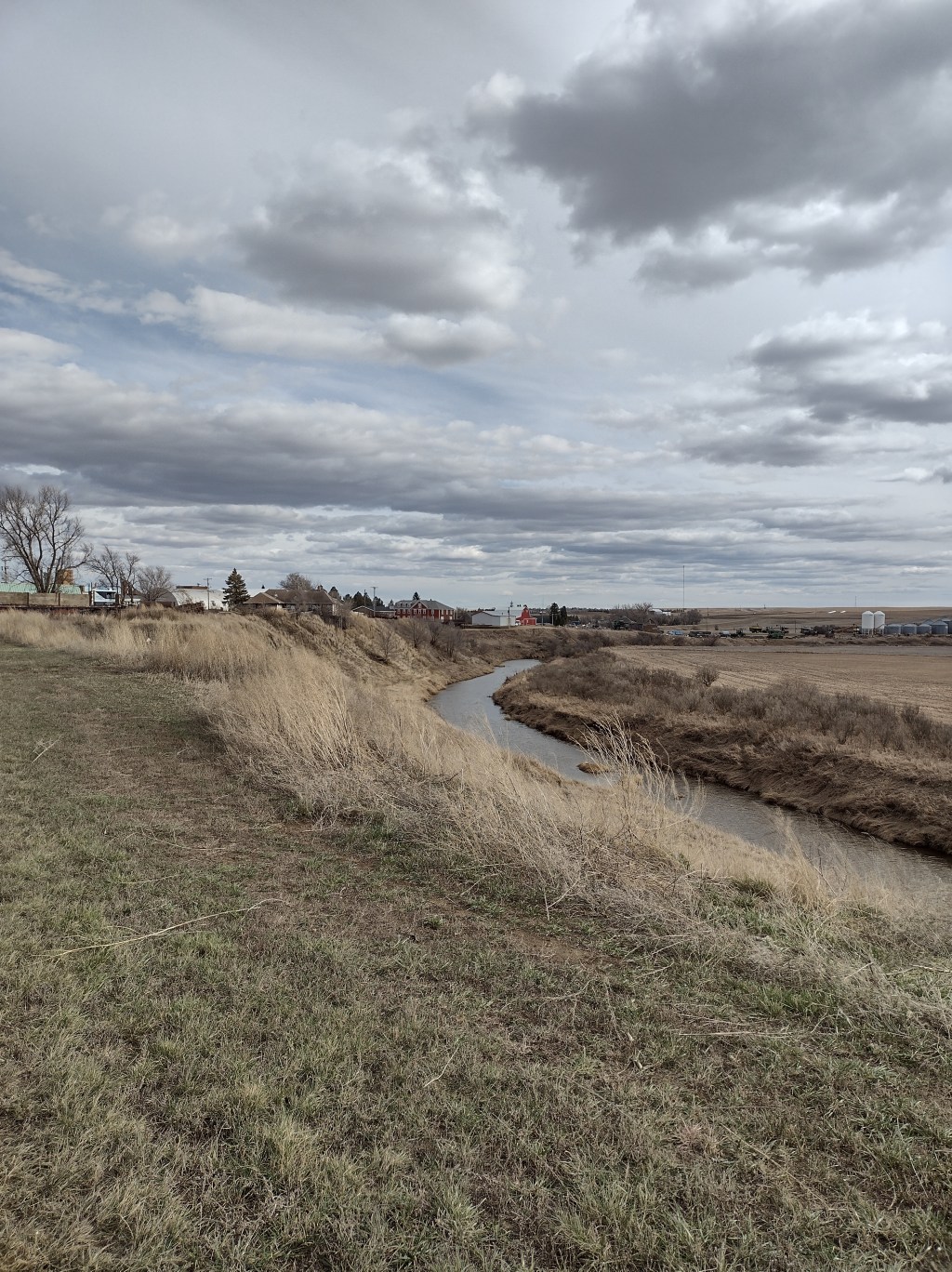
North Dakota is a very sparsely populated state, it mainly consists of hundreds of isolated, tiny towns, each with its own unique appearance, character, history, and origin.
Up until World War II, the majority of people in the United States lived in rural areas, where life revolved around farming and raising livestock. Families were much, much larger back then, with parents often having as many as ten children. Large families were needed in order to accomplish all of the plowing, planting, weeding, harvesting in the fields, and tending to chickens, ducks, geese, rabbits, pigs, goats, sheep, cattle, and horses.
After WWII, almost all of the towns in North Dakota began to shrink in population, and many towns disappeared altogether. Just outside of New England, the following towns dwindled to where they no longer exist: Havelock, De Sart, Whetstone Butte, Pierce, Daglum. Often the only remnants of these towns that can be seen today are their abandoned churches, one-room school houses, and cemeteries.
It may seem strange to people from the East Coast and West Coast of the United States why people continue to live in towns as small as New England, why do these towns even exist? One answer is that prior to WWII, most of the the people in the U.S. lived like this. New England is a remnant of how people used to live with farming and raising livestock as their primary concern.
Another reason why New England survived, and people continue to live in New England to this day, is because it is within easy driving distance to Dickinson on Highway 22, twenty-five miles to the north. Dickinson is just on the southern edge of the “Bakken Formation”, an oil field which experienced an Oil Boom in the mid-1950s, late 1970s, and 2007-2014.
During the Oil Booms, workers sought housing in New England when housing in Dickinson, Watford City, and Williston became scarce and unaffordable. And in addition, long-established farming families in New England were able to capitalize on the many opportunities to make substantial extra income during the Oil Booms through construction, commercial truck driving, equipment operation, and other oil field work.
Why write about New England? It does offer a slow-paced, quiet, peaceful, uneventful, low-cost, affordable way of life, but without fully understanding, a new resident could very likely feel disappointed and trapped. It might be a welcome change for some people, just what they are looking for, but for other people it could be a disaster.

 New England North Dakota.com
Leave a comment